

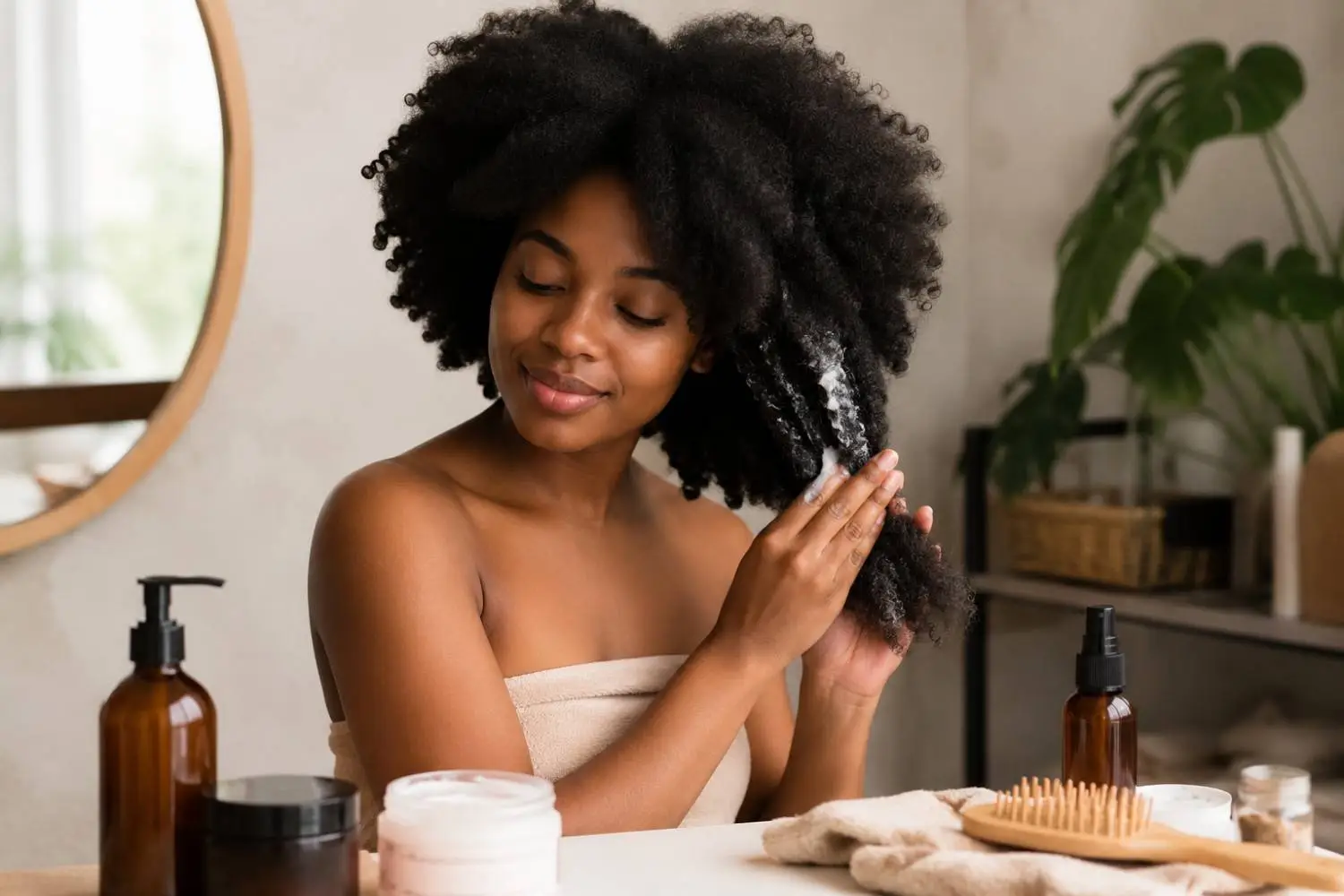
Your Afro hair is not difficult. It just speaks a different language.
No need to hustle with those expensive hair products. In this blog post, we have broken down the effective best hair care routine for Afro hair that you have to follow consistently to keep your hair healthy, strong, and easier to manage.
And if you ever need professional support, S24Salon in Birmingham, UK, is here to help with expert Afro and textured hair care tailored to your unique hair type.
So, grab your favourite drink, get comfortable, and let’s talk about a natural hair care routine that your curls, coils, and kinks will truly appreciate.
Start With a Gentle Cleansing Routine for Afro and Textured Hair
One of the biggest mistakes people make is washing their Afro hair too frequently or using harsh shampoos that strip away natural oils. Unlike straight hair, natural curls and coils have a harder time distributing oils from the scalp to the ends. That’s why moisture is such a big deal.
Try washing your hair every 7 to 14 days using a sulfate-free shampoo. This helps remove dirt, sweat, and product buildup without leaving your hair dry and brittle.
If your scalp gets oily between wash days, consider using a gentle co-wash. It cleanses your hair while helping it retain moisture.
A good cleansing routine is the foundation of any natural hair care routine. Once your scalp is clean and healthy, your hair is in a much better position to grow stronger and stay hydrated.
Pay attention to how your hair responds after washing. If it feels dry immediately after shampooing, it might be time to switch to a gentler product designed specifically for textured hair.
Deep Condition Weekly to Keep Textured Hair Moisturised
If there’s one step you should never skip, it’s deep conditioning.
Afro and textured hair naturally need more moisture than many other hair types. Deep conditioners help replenish hydration, strengthen strands, and reduce breakage.
Do this treatment at least once a week. You need to apply it generously from roots to ends and leave it on for the recommended time.
Regular deep conditioning helps improve elasticity, which means your hair can stretch without snapping easily. That’s especially important if you’re trying to retain length.
Many people searching for the best hair care routine for afro hair are surprised to discover that moisture retention, not hair growth products, is the key to healthier-looking hair.
Ingredients like shea butter, avocado oil, coconut oil, aloe vera, and honey are a must-have. These ingredients can help restore softness and improve overall hair condition.
Use the LOC or LCO Method to Lock in Moisture
After washing and conditioning, your next goal is to keep that moisture inside your hair for as long as possible. That’s where the LOC and LCO methods come in.
- LOC stands for Liquid, Oil, and Cream.
- LCO stands for Liquid, Cream, and Oil.
Both methods are designed to seal moisture into your strands. The best option depends on how your hair responds to products. Some people find LOC works better, while others prefer LCO.
Start with a water-based leave-in conditioner. Then, apply either oil or cream based on your chosen method. Finally, finish with the remaining product to seal everything in.
Consistency matters more than perfection. Following this step regularly can reduce dryness, improve curl definition, and make your hair easier to manage throughout the week.
A well-structured natural hair care routine should always include a moisture-sealing step because hydration alone is not enough if your hair cannot retain it. Don’t be afraid to experiment with products until you find the combination that works best for your curl pattern and hair density.
Detangle Afro Hair the Right Way to Prevent Breakage
Detangling can either help your hair thrive or cause unnecessary damage.
The secret is patience.
Never detangle dry Afro hair. Dry strands are more likely to snap, stretch, and break. Instead, work on damp hair coated with a conditioner or detangling product that provides slip.
In that, you should use your fingers first to gently separate knots before reaching for a wide-tooth comb. Start from the ends and slowly work your way upward toward the roots.
Trying to force a comb through tangled hair can only lead to breakage and frustration.
When people talk about the best hair care routine for afro hair, proper detangling is one of the habits that gets mentioned repeatedly because it helps preserve length and maintain healthy strands.
Take your time and divide your hair into sections. This makes the process much easier and helps you avoid pulling on your curls unnecessarily.
Protect Afro and Textured Hair While You Sleep
Many people spend time caring for their hair during the day, but forget about what happens at night. Cotton pillowcases are a nightmare for your hair type as they can absorb moisture and create friction that leads to frizz, tangles, and breakage.
Switching to a satin or silk bonnet can make a noticeable difference. Satin pillowcases are another great option if bonnets aren’t your thing.
You can also loosely braid or twist your hair before bed to help preserve styles and reduce tangling overnight. Protecting your hair while you sleep is one of the simplest ways to support a healthy, natural hair care routine without putting extra work into your day.
When your hair stays protected overnight, you’ll spend less time fixing tangles and more time enjoying healthy, manageable curls.
Trim Regularly and Choose Protective Hairstyles for Healthy Growth
You might be doing everything right, washing your hair carefully, deep conditioning every week, and keeping it moisturised. However, one of the top hair care mistakes that damage Afro hair is overlooking damaged ends. If your ends are damaged, your hair can still struggle to retain length.
That’s why regular trims are necessary. Holding on to split ends doesn’t help your hair grow longer. In fact, those damaged ends can continue splitting higher up the strand, which leads to more breakage over time.
In addition to learning more about the best hair care routine for afro hair, you should stick to protective styling because it helps reduce breakage and supports length retention. A few small habits like these can go a long way in helping your curls stay healthy, strong, and ready for whatever style you choose next.
Trust S24 Salon for Afro and Textured Hair Care
Looking for a trusted Afro hair salon in Birmingham? Your Afro is your crown, so don’t drop it! You deserve quality care for your Afro, natural curls, and European textured hair, and that is what we offer at S24 Salon.
If you’re looking for a caring, passionate and experienced team, look no further. Our team has 15 years of experience as hair specialists and aesthetic practitioners.
Don’t compromise on your natural beauty. We offer a range of services from hair smoothing and natural hair braiding to hair extensions and colour services.
Your hair is our passion!
You can either give us a call or book a time slot with us online! Choose us for your hair goals, and we guarantee you will be back for more soon!
FAQs
Q1. How often should you wash Afro and textured hair?
Ans: Ideally, you should wash your Afro or textured hair once every 7 to 14 days. When you do this, it will help eliminate buildup from hair products while allowing natural oils to stay in the hair.
Q2. Why is moisture important for Afro hair?
Ans: Afro hair naturally loses moisture faster than other hair types because of its curl pattern. Keeping your hair moisturised helps reduce dryness, breakage, and frizz while supporting stronger, healthier strands and better overall hair manageability.
Q3. What are the best protective hairstyles for Afro hair?
Ans: Braids, twists, cornrows, and wigs are some of the protective hairstyles that don’t hurt your hair’s scalp. When installed and maintained properly, these styles help you retain length, reduce breakage, and support healthy hair growth.
Q4. Can you use heat styling tools on textured hair?
Ans: Yes, you can use heat styling tools on your textured hair, but moderation is important. Always apply a heat protectant before styling and avoid excessive heat exposure to help prevent dryness, split ends, and long-term damage.
Q5. When should you visit a professional salon for Afro hair care?
Ans: You should visit a professional salon when your hair needs deep treatments, protective styling, colouring, trimming, or specialised care. Professional hair experts can assess your hair condition and recommend services that suit your hair goals and routine.